
How to Train Yourself to Become a Great Leader

Natural born leaders are few and far between. Many leaders get where the are today because of what training they put themselves through. Leaders train themselves in a variety of ways, whether that’s gaining insights from others or learning through personal experience. Regardless, being an effective leader isn’t about what know, it is about what you do. If you are looking to become a more effective leader, here are a few ways that you can train yourself to be a great leader.

If you make a promise, keep it.

As leader, you will find yourself going out of the way to please the people around you. Sometimes this means you can get ahead of yourself and take on more promises than what you can keep. One thing that will kill your credibility pretty fast is not keeping your word. It can be challenging to keep a promise sometimes, especially when your schedule is packed, but commitment with your team and your colleagues helps develop discipline and integrity.

Dress to Influence

In a world where business casual is prominent in most offices, it’s important not to throw your image out the door. You will want to make sure that your appearance stays consistent with both your personal and professional brand without looking sloppy. Ask yourself how a leader with your passions and dreams should appear to others. While sweatpants are much comfier then dress pants, they don’t embody what it means to be a leader.

Treat Your Team With the Same Respect as Clients

Asking your team to be courteous and kind to the clients, but you treating them with disrespect and abuse is hypocritical. Just because you are in an elevated position, does not give you the right to be disrespectful. As a leader you need to be courtesy in everything that you do and find any way that you support your employees.

Commit to Growth

To get your business to grow, you need to be able to grow yourself and grow your team. When your team is able to improve, you will find that so will your service levels, as well as the rest of the of the business.

Don’t Wait for Feedback

When leaders receive feedback, they will often take it as a criticism and not see it as a learning opportunity. Feedback is a great way to finding out how you are performing and where you can improve as a leader. But, don’t wait around for your employees to give your feedback. Be upfront and ask for their opinions. Don’t ask them to list what they like and dislike about you. Ask them for their opinions and insights on how you can be a better leader.

Originally published on JasonWalkerPhd.com
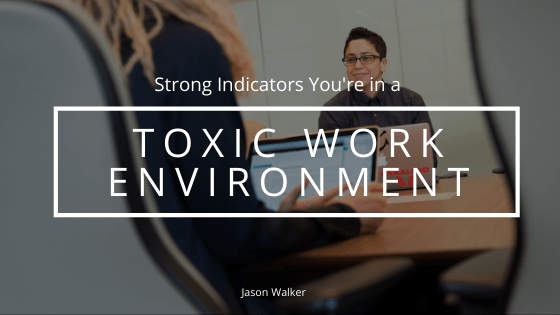
Strong Indicators You’re in a Toxic Work Environment

If you wake up every morning and dread going to work, you are most definitely not alone. Across the world, there are many professionals who are unhappy with their jobs. In the United States for example, about 53% of Americans are not happy at their job. In some cases, you have to work while in a less-than-perfect work scenario. However, if your job is adding to your stress levels and affecting your mental stability you may be working in a toxic environment. If you have a suspicion that you are working in a toxic environment, look out for these signs.

The Work is Too Much

There is a difference staying busy and drowning in work. When you feel like you are constantly behind in your work, it can seem unattainable to finish your work within an allotted time. Too much work can make anyone feel anxious or depressed. If you are staying late every day or taking work home, your workload is just too much.

You Are Showing Physical Signs of Anxiety

If you are experiencing stomachaches, headaches, appetite changes, or panic attacks, you are experiencing the symptoms of anxiety.  These symptoms don’t just happen on their own. It is how your body communicates with you and tells you that something is wrong. If you experience these symptoms while getting ready for work, it’s a strong indication that your workplace is causing your anxiety.

There is Constant Gossip 

Every office you go to, there is sure to be some gossip, but that doesn’t mean you have to participate. Gossip does more harm than good, it can create false rumors and make others feel excluded. If someone is engaging in gossip, try changing the subject or walking away.

Workplace Bullying is Evident

Whether you are the victim or a bystander, bullying or harassment can affect everyone. Any emotional or physical abuse should not be tolerated in a work environment. If bullying in the workplace is not put to a stop, many employees can be affected on a negative level.

People Are Quitting 

If you feel like you are in a toxic work environment, chances are your other coworkers feel the same. To get out of the environment as fast as possible, you will find more and more people are writing resignation letters and leaving the organizations. If you notice that there is a constant stream of people leaving, it’s a good indication that the environment is too toxic.

Originally published on JasonWalkerResearch.com

Principles of Purpose-Driven Leadership

What makes a good leader? What kinds of qualities do effective leaders possess? If your goal is to become a long-term effective leader, there are several key principles that must be mastered first. Which of these areas reflect your own strengths? Which ones need a little work?

Be A Good Listener

Purpose-driven leaders understand that it is as important to listen as it is to be heard. They recognize that other people’s input has value and that all problems and issues are significant. While it may seem like quite a bit to shoulder, this is one area that no effective leader can afford to lack in skill.

Lead By Example

Never expect better from your subordinates than what you project. The effectiveness of your leadership will always be gauged by how well you follow your own rules. Leaders and influencers display a degree of transparency that commands respect. Always set the example in front of your subordinates and you will find that they set their standards as high – if not higher – than yours.

Be Available

Don’t be the supervisor, manager, or executive that constantly has to be chased down. Answer relevant texts and emails promptly. Reserve office hours to meet with employees who have specific concerns that only you can effectively address. Your presence alone tells people that you understand their work environment and that you are an involved leader.

Read

Purpose-driven leaders take their cues from more-successful people. This is why effective leaders identify influencers in their area of management or leadership and learn how to emulate their successes. Read everything you can by and about the highly successful people in your industry. You will learn their secrets and their methods and will be able to apply what you learn to how you lead.

Be a True Leader

Effective leaders are constantly identifying and addressing areas that need improvement and making proactive changes to facilitate it. Project true leadership qualities in a way that makes your subordinates want to be more like you.

Remember that your subordinates will only ever work as hard as you do. They will only ever strive for excellence to the degree that you do. Keep this and the rest of the advice in this article in mind as you continue to develop strong leadership qualities within yourself.

Originally posted on JasonWalkerPhD.com

Overcoming Workplace Bullying One Step at a Time

As one of the most insidious problems in contemporary society, there can be little doubt that workplace bullying is particularly nefarious in its aims. Designed to make employees question their sense of self-worth and grasp of reality, the experience of workplace bullying can often take years to overcome. Fortunately, taking the following steps to cope with workplace bullying can significantly help individuals to rise above the abusive behavior that toxic workmates or toxic managers can engage in.

1. Separate Fact from EmotionBecause workplace bullies tend to create an atmosphere of outwardly-directed shame around their own toxic behavior, workplace bullying can be a particularly difficult series of events to emotionally process. More often than not, an employee will walk away from a negative work environment mistakenly believing themselves to be “deserving” of abuse. In reality, no one should ever have to deal with the kind of negative behavior that abusive colleagues or managers regularly inflict on their colleagues and employees. Indeed, separating the fact of bullying from the feelings of shame that such tactics elicit is essential for overcoming a bad experience.

2. Seek a Healthy Transition into Better Work EnvironmentsIt is a sad fact of life that workplace bullying does not always end when a bullied employee leaves a particular employer. To spite the people that they have abused, toxic managers will often give bad references to former employees. Undoubtedly, the best course of action in such scenarios is to mitigate further abuse before it starts: Instead of seeking a reference from a toxic manager, in other words, bullied individuals should seek out recommendations from trusted former workmates or colleagues.

3. Take Time to Develop a Good Self-Care RoutineBeing the subject of bullying can be exhausting in the extreme, and many victims of workplace bullying often find themselves dealing with a bad case of burnout for months or even years after they have left a toxic employer. Indeed, one of the most damaging effects of workplace bullying lies in the erosion of trust that victims experience even after leaving a toxic employer. During the job hunt, these individuals should try to look for employers that are not likely to abuse the sense of trust that is essential for a healthy workplace culture. Rebuilding confidence in business leaders is not easy at first, but with the right employer, people who have experienced workplace bullying in the past can discover that not all workplace environments are toxic.

Originally published on JasonWalkerResearch.com

Design a site like this with WordPress.com
Get started